


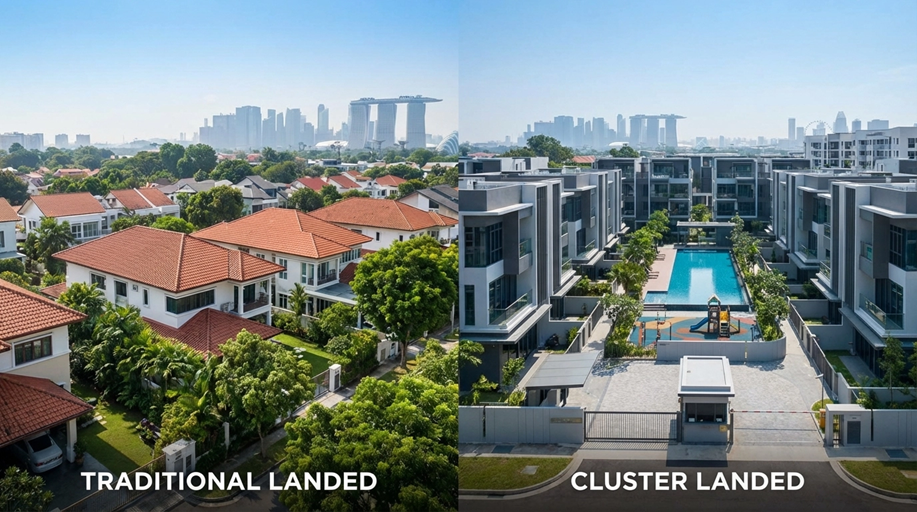
What’s the Difference in Singapore?
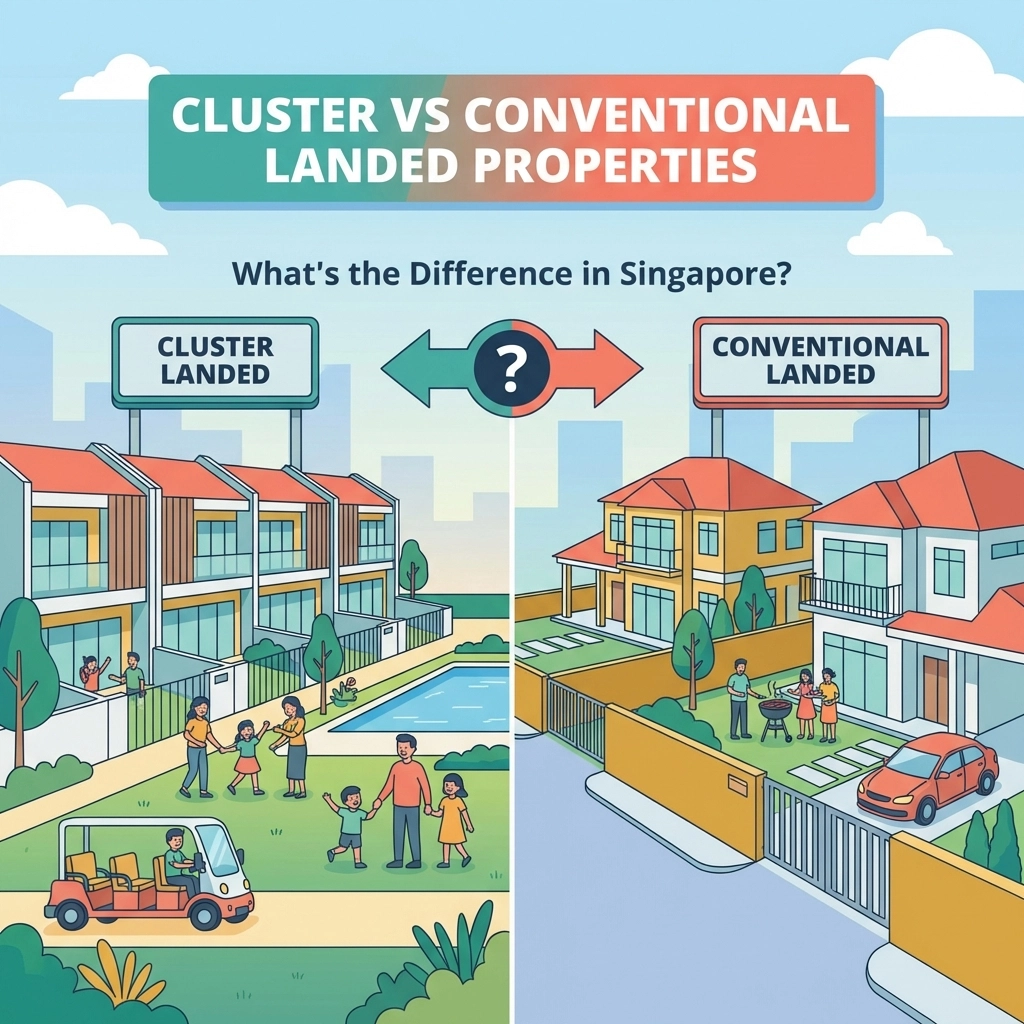
When it comes to property hunting in Singapore, there’s something undeniably special about landed homes. Picture this: no shared walls with neighbours above you, your own garden space, and that sweet feeling of owning a piece of land in one of the world’s most expensive real estate markets. But here’s the thing , not all landed properties are created equal.
If you’ve been browsing listings or chatting with property agents, you’ve probably come across terms like “cluster housing” and “conventional landed.” And you might be wondering: what’s the actual difference? More importantly, which one is right for you?
Let’s break it all down in plain English.
📥 Free Guide: Buying Landed in Singapore
Get tips on cluster vs conventional, costs, and more.
Looking for the best deal on this? You can compare cost per application on SingSaver.
Disclosure: NearMe.SG may earn a commission from some links on this page. This does not affect our editorial recommendations.
Compare now →A Quick Overview of Landed Property Types in Singapore
Before we dive into the cluster vs conventional debate, let’s get our basics sorted. Only about 5% of Singaporeans live in landed properties , making them pretty exclusive in our land-scarce nation.
Here are the main types you’ll encounter:
Terrace Houses , These are row houses sharing walls on both sides (or one side if it’s a corner unit). They’re the most affordable landed option and common across mature estates.
Semi-Detached Houses , Also known as “semis,” these share one common wall with a neighbour. You get more space and privacy than a terrace, but at a higher price point.
Detached Houses (Bungalows) , Standalone homes with no shared walls. These offer maximum privacy and typically come with larger land plots.
Good Class Bungalows (GCBs) , The crème de la crème. These are bungalows on plots of at least 1,400 sqm located in designated GCB areas. Think Nassim Road, Bukit Timah, and Holland Road. We’re talking serious money here.
Cluster Housing , And this is where it gets interesting. Cluster housing can look like any of the above (terrace, semi-D, or bungalow), but it operates very differently.
What Are Conventional Landed Properties?
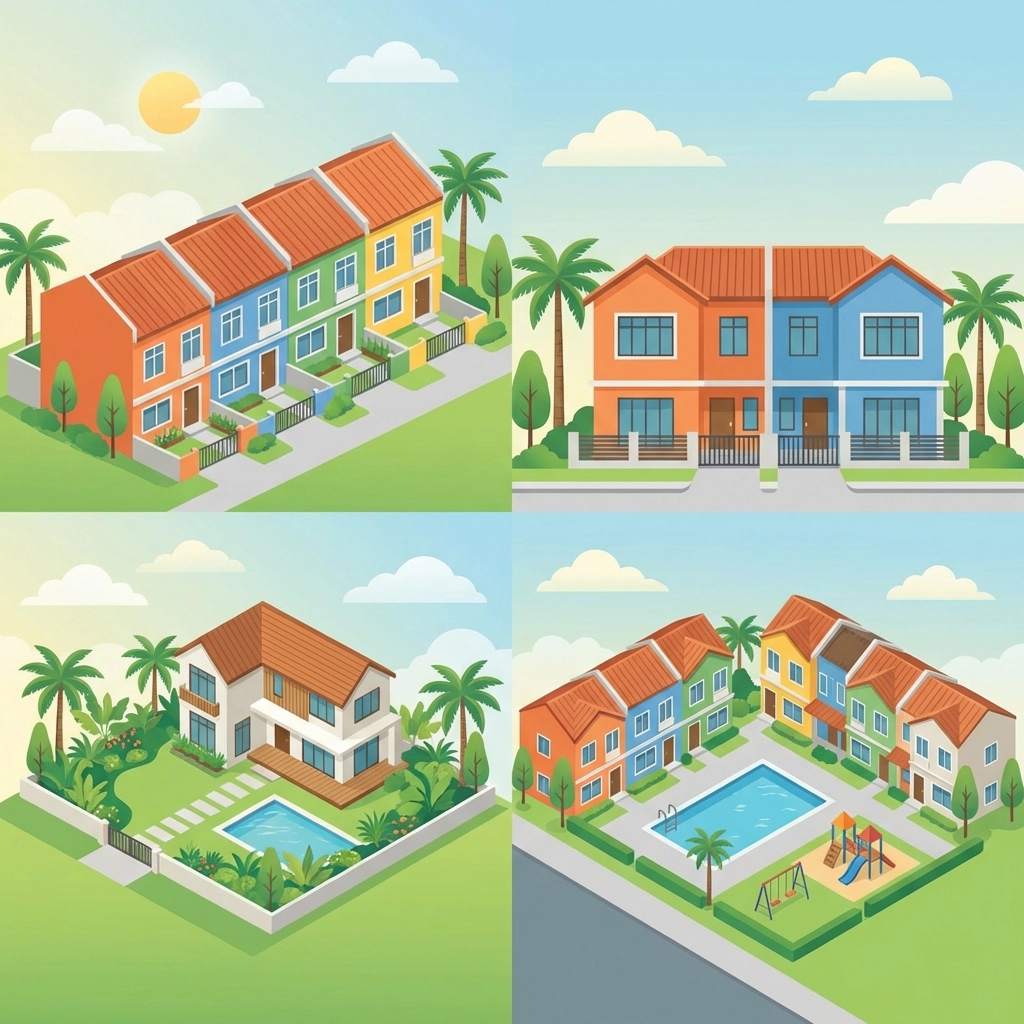
Let’s start with the traditional option. Conventional landed properties are exactly what most people imagine when they think of landed homes in Singapore.
You own the land outright. This is the big one. When you buy a conventional landed property, you’re purchasing both the house AND the piece of earth it sits on. That land title is yours , whether it’s freehold, 999-year leasehold, or 99-year leasehold.
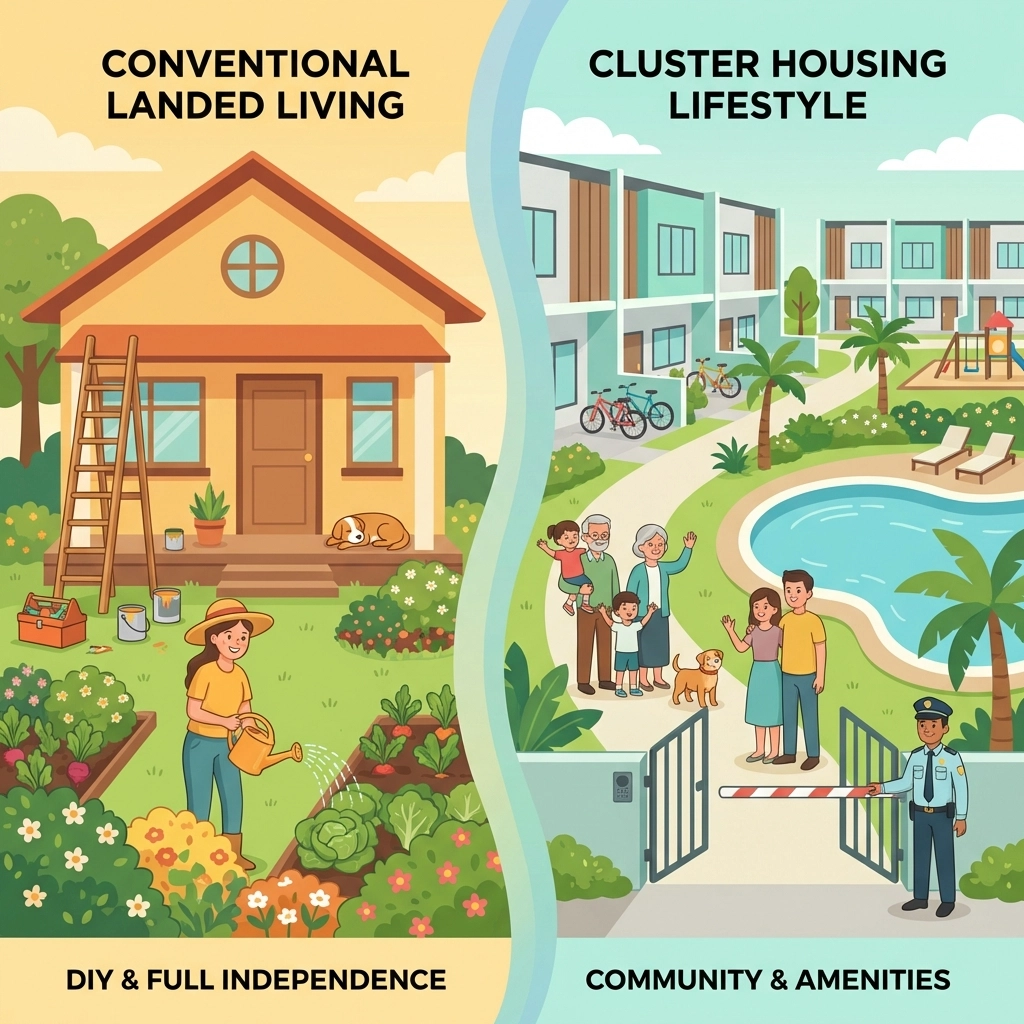
No shared facilities. There’s no swimming pool, gym, or security guardhouse included. Your property stands independently, and you’re responsible for your own security measures and amenities.
Full control over your property. Want to renovate your kitchen? Extend your porch? Paint your house bright yellow? As long as you comply with URA guidelines, you have significant freedom to modify your home without seeking approval from a management committee.
You handle all maintenance. From pest control to landscaping to fixing that leaky roof , it’s all on you. No monthly maintenance fees to a managing body, but also no shared burden when something goes wrong.
Popular areas for conventional landed properties include Bukit Timah, Serangoon Gardens, Opera Estate, and Sembawang. If you’re looking for affordable landed homes under $3.5M, areas in the North and East tend to offer better value.
What Is Cluster Housing?
Now here’s where things get interesting. Cluster housing is essentially a marriage between landed living and condominium lifestyle. From the outside, a cluster house might look exactly like a conventional terrace or semi-D. But the ownership structure? Completely different.
Strata title ownership. Unlike conventional landed, you don’t own the land outright. Instead, you hold a strata title , meaning you share ownership of the land and common areas with all other residents in the development. Think of it like owning a condo unit, except your “unit” is a landed house.
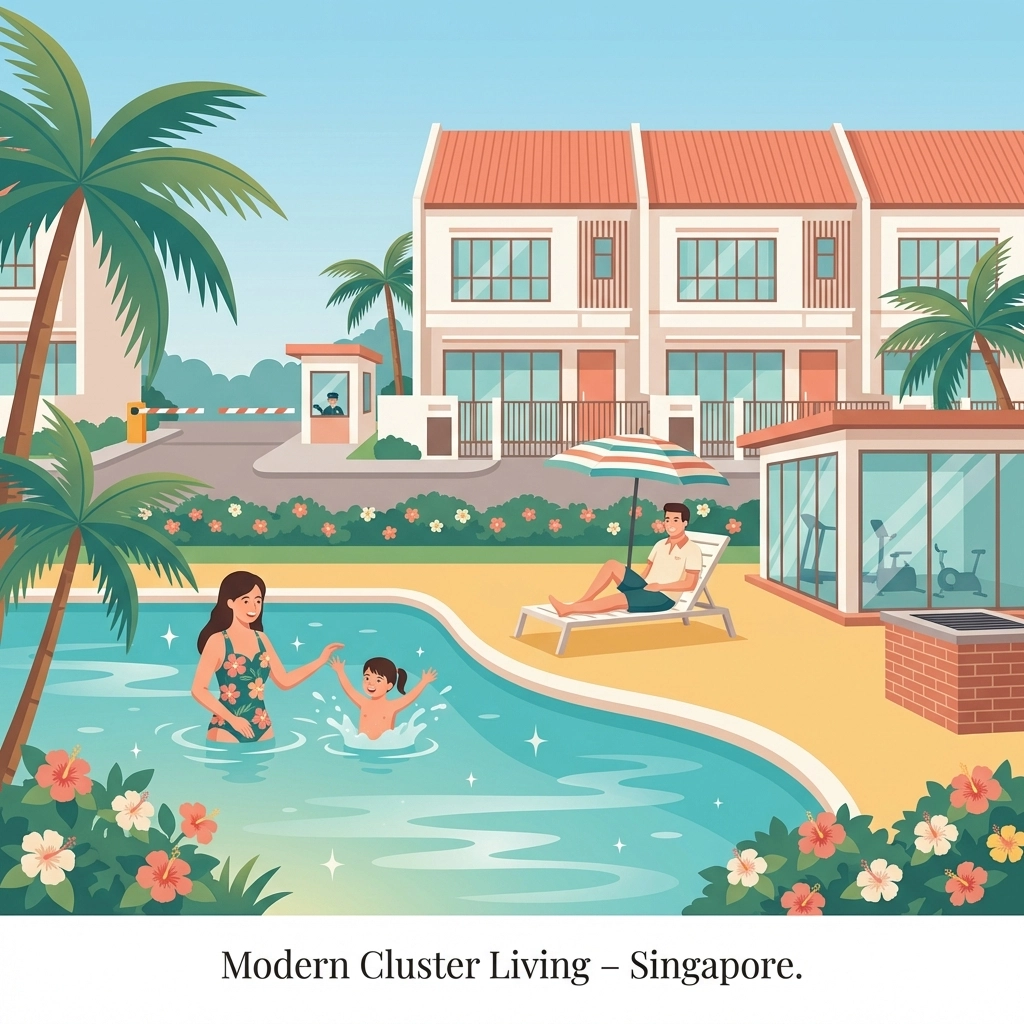
Condo-style facilities included. This is the major draw. Most cluster housing developments come with swimming pools, gyms, BBQ pits, function rooms, playgrounds, and 24-hour security. Some even have tennis courts, saunas, and clubhouses.
MCST governs the estate. A Management Corporation Strata Title (MCST) manages the development, collects monthly maintenance fees, and enforces by-laws. Yes, this means you’ll pay maintenance fees : typically ranging from $300 to $800 per month depending on the development.
Restrictions on modifications. Because of MCST by-laws, you can’t simply renovate as you please. Major external changes usually require approval. This keeps the estate looking uniform but limits your personal freedom.
Cluster vs Conventional Landed: The Key Differences
Let’s put them side by side so you can see exactly how they stack up:
| Factor | Conventional Landed | Cluster Landed |
|---|---|---|
| Land Ownership | Full ownership | Strata (shared) |
| Facilities | None included | Pool, gym, security, etc. |
| Monthly Fees | None | $300–$800+ |
| Renovation Freedom | High (URA rules apply) | Limited (MCST approval needed) |
| Security | Self-arranged | 24/7 included |
| Maintenance | Owner’s responsibility | Shared via MCST |
| Privacy | Higher | Lower (communal spaces) |
| Entry Price | Generally higher | More accessible |
Pros and Cons: Which Suits Your Lifestyle?
Conventional Landed : Best For:
✓ Buyers who want full land ownership and long-term asset appreciation
✓ Those who value privacy and independence
✓ Homeowners who want freedom to renovate and customise
✓ Families planning to pass down property across generations
✓ People who don’t need or want shared facilities
✗ Higher upfront costs
✗ Full maintenance responsibility
✗ No built-in security
Cluster Housing : Best For:
✓ Buyers who want landed living with condo conveniences
✓ Families with kids who’d love pools and playgrounds
✓ Those who prefer gated security without arranging it themselves
✓ Buyers with a slightly smaller budget for landed
✓ People who don’t mind paying maintenance fees
✗ No full land ownership
✗ MCST restrictions on renovations
✗ Monthly fees add up over time
Pricing Trends: What’s the Market Like?
Here’s the reality check. Conventional landed properties generally command higher prices due to full land ownership : particularly freehold ones. In prime districts like D10 and D11, expect conventional terraces to start from $4M to $6M, while semi-Ds and bungalows go much higher.
Cluster housing, on the other hand, offers a more accessible entry point into landed living. You might find cluster terraces starting from $2.5M to $3.5M in areas like Sengkang, Punggol, or Hougang. The trade-off? You’re sharing land ownership.
That said, both property types have shown solid appreciation over the years. Conventional landed tends to appreciate faster in the long run due to land scarcity, but cluster housing in well-maintained developments holds its value well too.
For more insights on where to invest, check out our guide on the best Singapore districts for property investment.
Practical Tips for Buyers
1. Know your priorities. Do you value full ownership and freedom, or do you prefer convenience and facilities? Be honest about your lifestyle needs.
2. Factor in total costs. Cluster housing looks cheaper upfront, but those monthly maintenance fees add up. Over 20 years, you could pay $100,000+ in fees alone.
3. Check the MCST track record. For cluster housing, research the management’s reputation. A poorly-managed estate can be a nightmare.
4. Consider future resale. Conventional landed with freehold or 999-year leases tend to have broader buyer appeal.
5. Visit at different times. Check out the estate during weekdays, weekends, and evenings. You’ll get a real sense of the community vibe.
6. Verify land tenure. Whether cluster or conventional, always check if it’s freehold, 999-year, or 99-year leasehold. This affects long-term value significantly.
Final Thoughts
At the end of the day, choosing between cluster and conventional landed comes down to what matters most to you. Want that true blue landed experience with full land ownership and maximum freedom? Go conventional. Prefer the best of both worlds : landed space with condo perks? Cluster housing might be your sweet spot.
Both are solid investments in Singapore’s property market. The key is understanding exactly what you’re buying : and making sure it fits your lifestyle, budget, and long-term goals.
Happy house hunting!
Looking for more property insights? Browse our blog for the latest guides on Singapore real estate, or explore new property launches in 2026 to stay ahead of the market.
📥 Free Guide: Buying Landed in Singapore
Get tips on cluster vs conventional, costs, and more.
Looking for the best deal on this? You can compare cost per application on SingSaver.
Disclosure: NearMe.SG may earn a commission from some links on this page. This does not affect our editorial recommendations.
Compare now →RELATED POSTS
View all

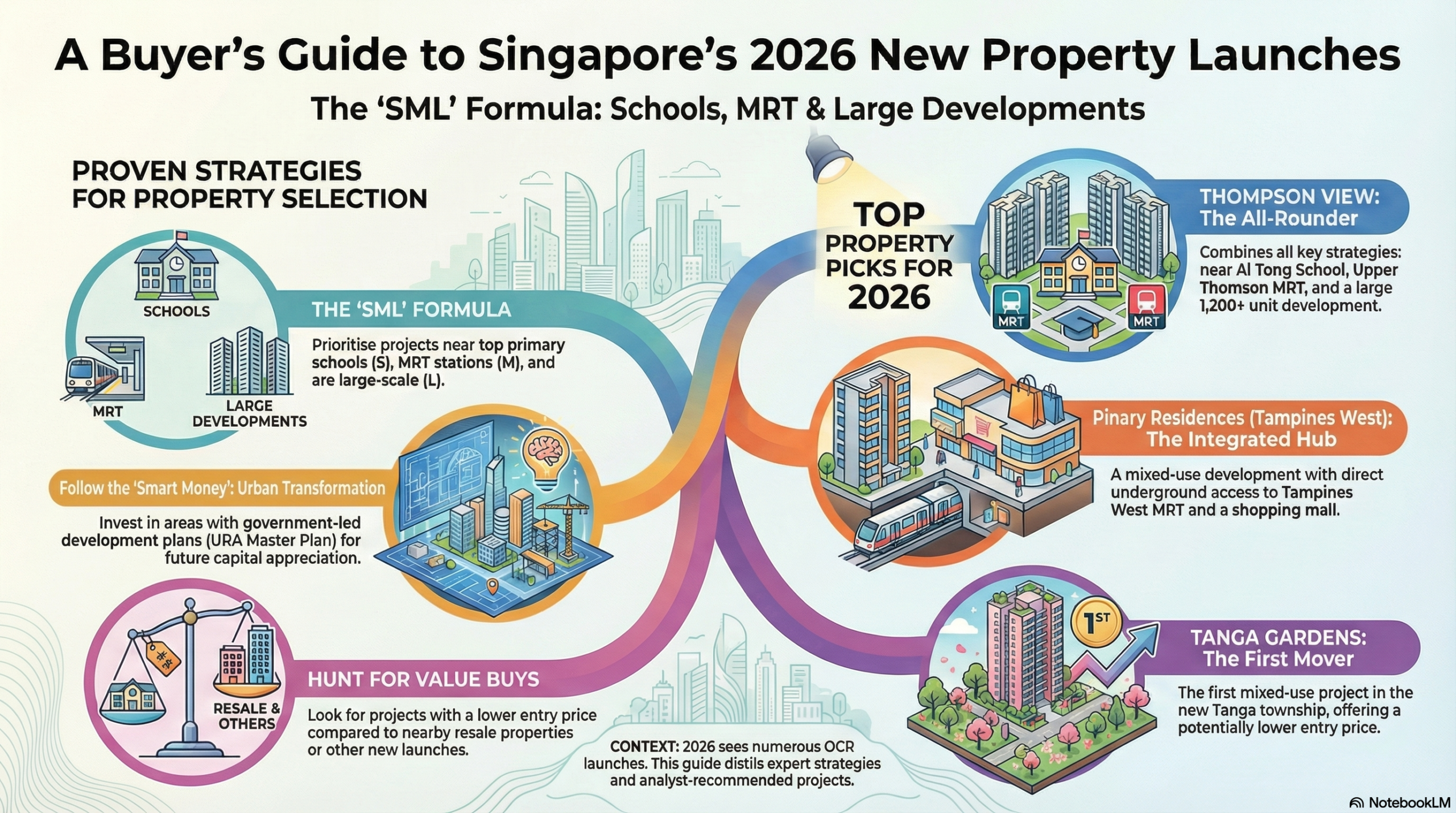
Singapore New Property Launches 2026: In-Depth Analysis
January 6, 2026 | by nearme.sg

Private Driving Instructor CDC: Best in 2025
November 12, 2024 | by nearme.sg
Vela Bay at Bayshore Review: Free Expert Guide 2026
February 7, 2026 | by nearme.sg