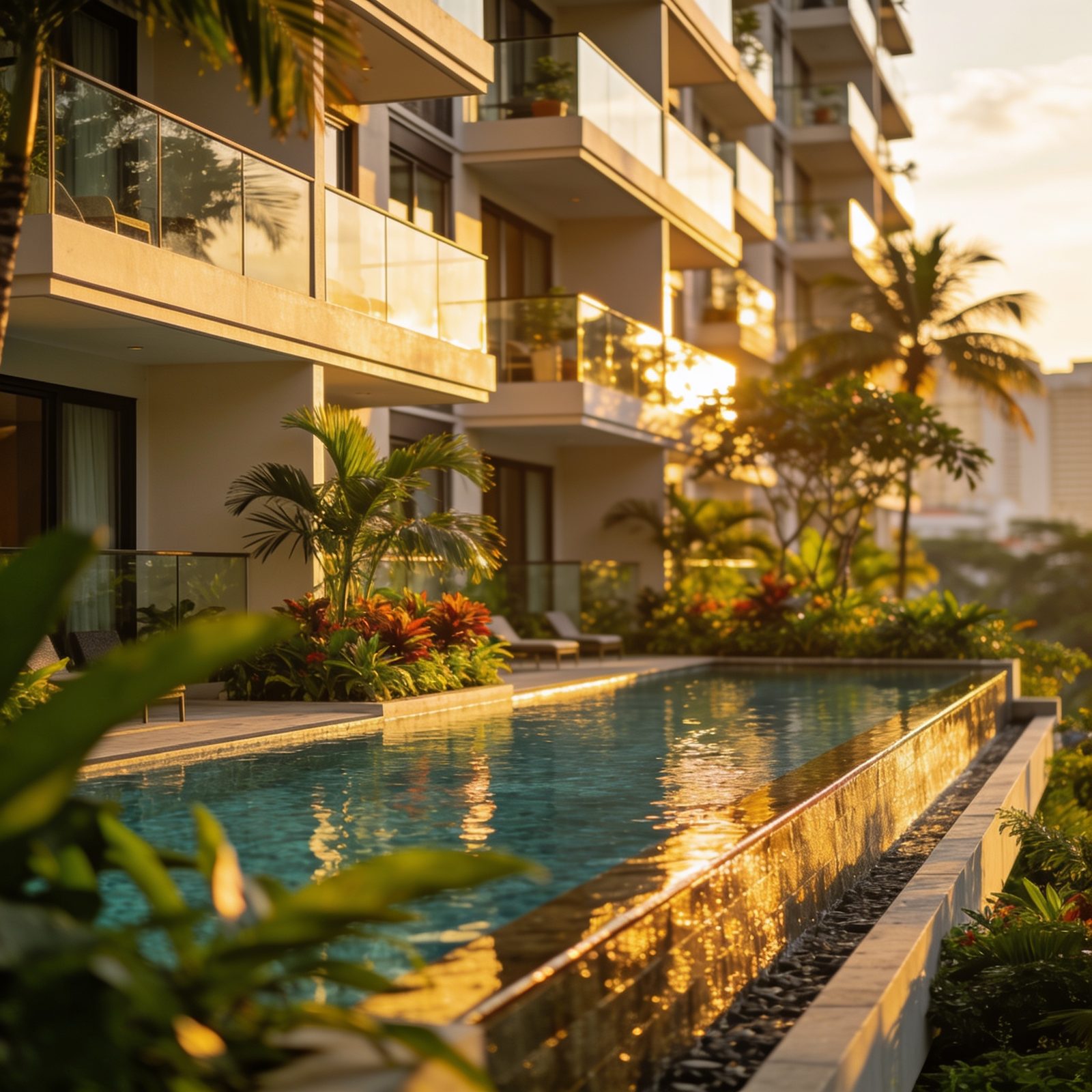


Understand GFA Harmonisation: Ultimate Guide to More Usable Space
January 20, 2026 | by nearme.sg

How to use this calculator:
- Step 1: Enter the Size (sqft) and Total Price from the property listing.
- Step 2: Adjust the Efficiency %.
(Tip: Use 80% for older condos with big AC ledges/planters. Use 100% for new “Harmonised” projects.) - Step 3: Hit “Calculate” to see the Real Price you pay for usable space!
The “Real Value” PSF Calculator
Compare two properties to see which one is actually cheaper per square foot of liveable space.
Property A (e.g. Resale)
(Pre-harmonised units usually have ~80% efficiency)
Property B (e.g. New Launch)
(Harmonised units are close to 100% efficiency)
📥 Free GFA Harmonisation Cheatsheet
Get our 1-page guide to comparing usable space in resale vs new condos.
Looking for the best deal on this? You can compare cost per application on SingSaver.
Disclosure: NearMe.SG may earn a commission from some links on this page. This does not affect our editorial recommendations.
Compare now →![[HERO] The Singapore Property Harmonisation Guide: Are You Actually Getting More Space? (2026 Tips)](https://nearme.sg/wp-content/uploads/2026/01/hs072-EZQhc.webp)
Ever looked at a property listing and wondered why that 1,200 sqft unit feels way smaller than it should? You're not imagining things, and you're definitely not alone.
For years, Singapore property buyers have been scratching their heads over floor area calculations. A unit listed at 1,000 sqft might only give you 750 sqft of actual liveable space. The rest? Planter boxes, massive AC ledges, and void spaces you can't even use. Frustrating, right?
Well, here's some good news. Since June 2023, Singapore's regulatory agencies finally got their act together and introduced GFA Harmonisation, a game-changing rule that's reshaping how we buy property. If you're shopping for a new launch in 2026, this is something you absolutely need to understand.
Let's break it down in plain English.
What Exactly Is GFA Harmonisation?
Think of it as Singapore's property measurement agencies finally speaking the same language.
Before harmonisation, the Urban Redevelopment Authority (URA), Singapore Land Authority (SLA), Building and Construction Authority (BCA), and Land Transport Authority (LTA) each had their own way of calculating Gross Floor Area (GFA). This created confusion, and worse, loopholes that developers could exploit.
GFA harmonisation standardises how floor area is measured across all these agencies. The rule kicked in from June 2023, with the first harmonised project hitting the market in March 2024.
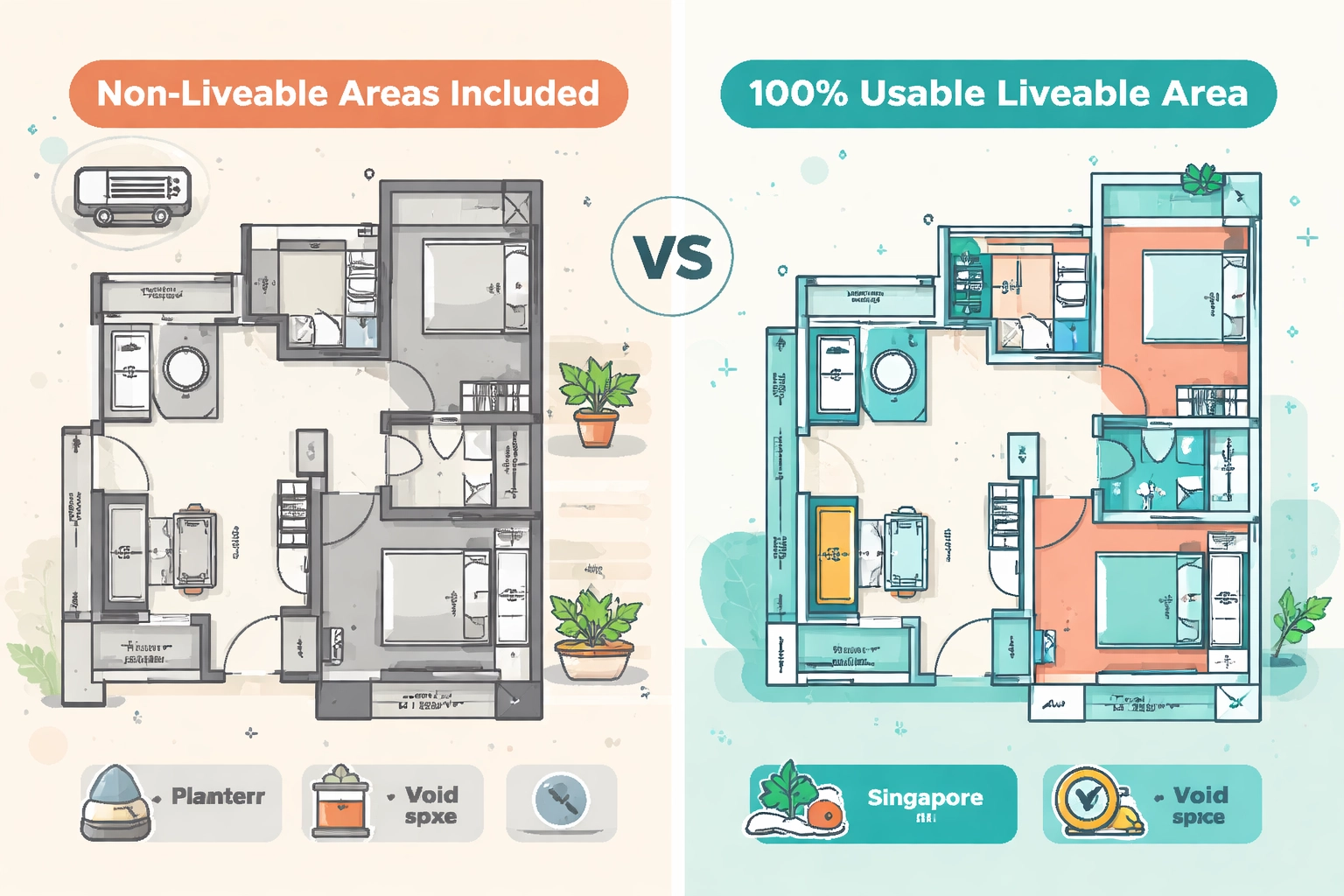
Under the new rules, non-livable features are no longer counted in your unit's floor area. This includes:
- Planter boxes
- Air-conditioning ledges
- High-ceiling void spaces (strata voids)
- Bay windows (in most cases)
In simple terms: what you see on paper is now what you actually get to live in.
The AC Ledge Situation: How Developers Used to Profit
Here's where things get spicy. Let's talk about the infamous AC ledge loophole.
Before harmonisation, developers had a sneaky little trick. They could build oversized AC ledges, sometimes ridiculously large, that didn't count towards their GFA quota from URA's perspective. This meant developers could max out their buildable area without these ledges eating into their allocation.
But here's the catch: when it came to selling units to you, these AC ledges were included in the strata area. So you'd pay for that extra square footage, even though you couldn't use it for anything except housing your aircon compressor.
Picture this: You're buying a 1,000 sqft unit at $2,000 PSF, thinking you're getting a decent-sized home. But 100 sqft of that is just AC ledges and planter boxes. You're essentially paying $200,000 for spaces you can't furnish, can't walk in, and can't enjoy.
Developers got free buildable area. Buyers paid for unusable space. Everyone won, except you.
This wasn't illegal, but it was definitely... creative accounting. And it made comparing properties incredibly difficult.
What Changed for Buyers After Harmonisation?
The harmonisation rules flipped the script. Now, those non-functional spaces are excluded from GFA calculations entirely, for everyone. Developers can't count them, and more importantly, you don't pay for them.
Here's what this means for you:
1. "What You See Is What You Get"
Post-harmonisation units list only the actual liveable space. If a unit says 900 sqft, you're getting 900 sqft of functional area. No hidden planter boxes. No oversized AC ledges eating into your usable space.
2. Better Space Efficiency
Developers are now incentivised to design smarter layouts. Since they can't pad their numbers with non-functional areas, they're focusing on maximising internal liveable space instead. You'll notice newer projects have much smaller, more practical AC ledges, just enough to fit the compressor, nothing more.
3. Easier Comparisons
Before, comparing a 2015 condo to a 2024 launch was like comparing apples to oranges. Now, post-harmonisation projects give you a cleaner baseline for evaluation.
Calculation Tips: Comparing Harmonised vs Older Projects
Alright, let's get practical. How do you actually compare a harmonised project to an older, pre-harmonisation property?
Here's a simple framework:
Step 1: Identify the "Efficiency Ratio"
For older properties, estimate how much of the listed floor area is actually usable. A good rule of thumb:
- Pre-harmonisation units: Assume 70-85% efficiency (meaning 15-30% is non-liveable space)
- Post-harmonisation units: Assume 95-100% efficiency
Step 2: Calculate Your "Effective PSF"
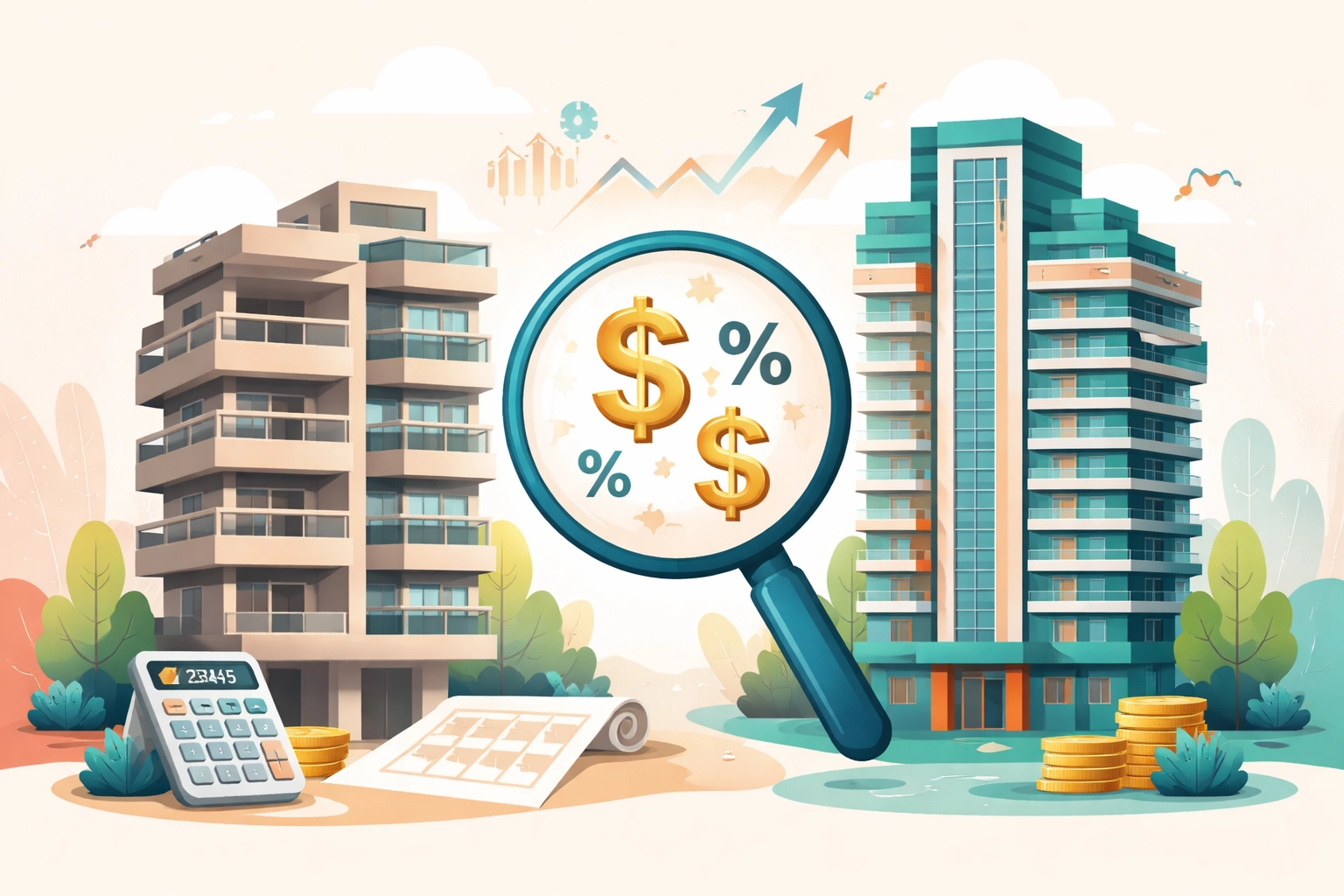
This is where the magic happens. Don't just look at the headline PSF: calculate what you're actually paying per usable square foot.
Example: Pre-Harmonisation Unit
- Listed size: 1,200 sqft
- Estimated liveable area: 850 sqft (71% efficiency)
- Price: $2,400,000
- Listed PSF: $2,000
- Effective PSF: $2,823 (price ÷ liveable area)
Example: Post-Harmonisation Unit
- Listed size: 950 sqft
- Liveable area: 950 sqft (100% efficiency)
- Price: $2,185,000
- Listed PSF: $2,300
- Effective PSF: $2,300
See what happened there? The post-harmonisation unit looks more expensive at $2,300 PSF vs $2,000 PSF. But when you calculate the effective PSF based on usable space, the older unit is actually costing you $2,823 per liveable sqft.
The newer unit is the better deal: even though the headline PSF is higher.
Step 3: Check the Floor Plan
Always request the actual floor plan. For older properties, look for:
- Oversized planter boxes
- Large AC ledges (some were almost room-sized!)
- Void spaces that count towards your strata area
For harmonised projects, these should be minimal or non-existent.
A Quick Comparison Table
| Factor | Pre-Harmonisation | Post-Harmonisation |
|---|---|---|
| Listed area includes | All spaces (liveable + non-liveable) | Liveable spaces only |
| AC ledge size | Often oversized | Minimal, functional |
| PSF appearance | Lower (but misleading) | Higher (but accurate) |
| Space efficiency | 70-85% typical | 95-100% typical |
| Comparison difficulty | Hard to evaluate | Straightforward |

What This Means for 2026 Property Buyers
If you're actively hunting for a new home or investment property this year, here's your action plan:
For New Launch Buyers
You're in luck. Any project launched after March 2024 should follow harmonisation rules. You can trust that the listed floor area represents actual liveable space. Focus on layout efficiency and functional design rather than worrying about hidden unusable areas.
Checking out new launches? Our Singapore New Property Launches 2026 guide covers the latest projects worth considering.
For Resale Buyers
Be extra careful when comparing older resale units to new launches. A lower PSF on a 2018 condo might look attractive: but you could be paying for inefficient floor plans packed with planter boxes and oversized ledges.
Pro tip: Ask the seller or agent for the actual internal measurements, not just the strata area. Calculate your effective PSF before making decisions.
For Upgraders
If you're planning to upgrade from HDB to condo, harmonisation actually makes your decision easier. New launches give you transparent pricing, and you can focus on what really matters: location, layout, and long-term value.
The Bottom Line: Higher PSF Isn't Always Worse
Here's the key takeaway that might save you hundreds of thousands of dollars:
Don't be fooled by headline PSF numbers.
A post-harmonisation project at $2,300 PSF could be better value than a pre-harmonisation resale at $1,900 PSF. It all depends on how much of that space you can actually use.
When evaluating any property in 2026, always ask:
- Is this a harmonised project?
- What's the actual liveable floor area?
- What's my effective PSF based on usable space?
The harmonisation rules have made Singapore's property market more transparent: but only if you know how to read between the lines. Now you do.
Ready to Make Smarter Property Decisions?
Understanding GFA harmonisation is just one piece of the puzzle. If you're serious about property investment in Singapore, check out our guides on the best districts for property investment and condo profits and losses analysis to make informed decisions.
Got questions about harmonisation or need help comparing specific properties? Drop a comment below: we're here to help you navigate Singapore's property landscape.
📥 Free GFA Harmonisation Cheatsheet
Get our 1-page guide to comparing usable space in resale vs new condos.
Looking for the best deal on this? You can compare cost per application on SingSaver.
Disclosure: NearMe.SG may earn a commission from some links on this page. This does not affect our editorial recommendations.
Compare now →RELATED POSTS
View all


Driving School Or Private Instructor in Singapore: Best Guide
June 21, 2024 | by nearme.sg
Thomson View Condo by UOL & CapitaLand: Free Expert Review
January 8, 2026 | by nearme.sg