


How to Save $20K+ Refinancing Your Mortgage in Singapore (2026 Edition)
August 2, 2026 | by nearme.sg
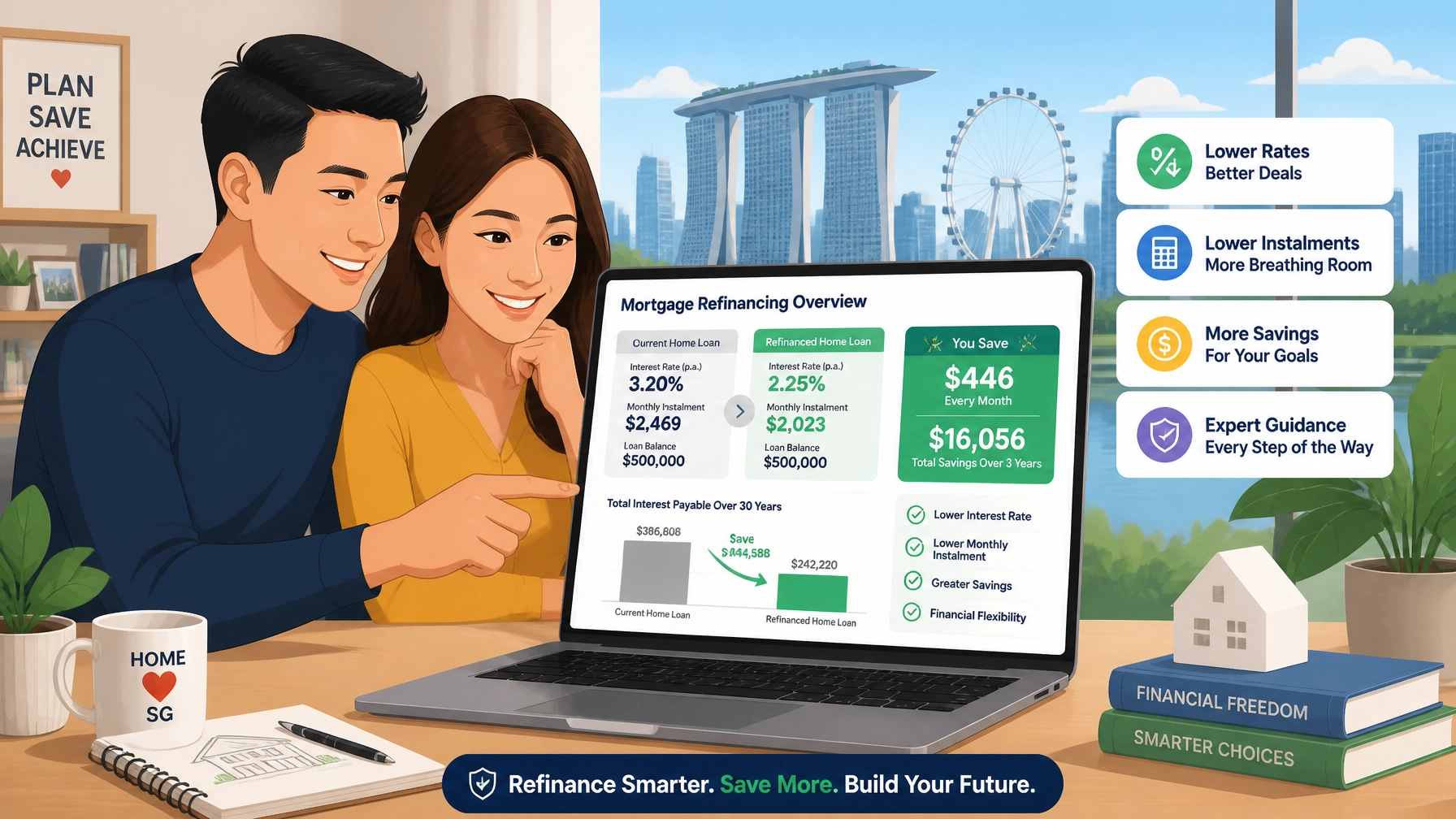
When it comes to managing your personal finances in Singapore, few financial commitments loom as large as your monthly home loan. You might be wondering right now: is it actually worth the hassle to refinance mortgage agreements in 2026? Picture this: sitting on a legacy home loan package carrying an interest rate of 3.5% or higher, while market benchmarks have dropped significantly. If you are tired of watching thousands of hard-earned dollars slip away in unnecessary interest payments, 👉 Explore Expert Local Financial & Home Guides on NearMe.SG! right away to stay ahead of the curve.
Let’s talk numbers and examine why 2026 is shaping up to be a golden window for Singapore homeowners to slash their mortgage burdens.
📥 📘 Free Guide: Save $20K Refinancing
Download our cheatsheet with top bank rates and hidden fees to avoid.
Looking for the best deal on this? You can compare cost per application on SingSaver.
Disclosure: NearMe.SG may earn a commission from some links on this page. This does not affect our editorial recommendations.
Get the free Property Buyer’s Checklist — a step-by-step guide to comparing rates, calculating break-even savings, and securing the best mortgage deal in Singapore.
The 2026 Singapore Home Loan Rate Landscape
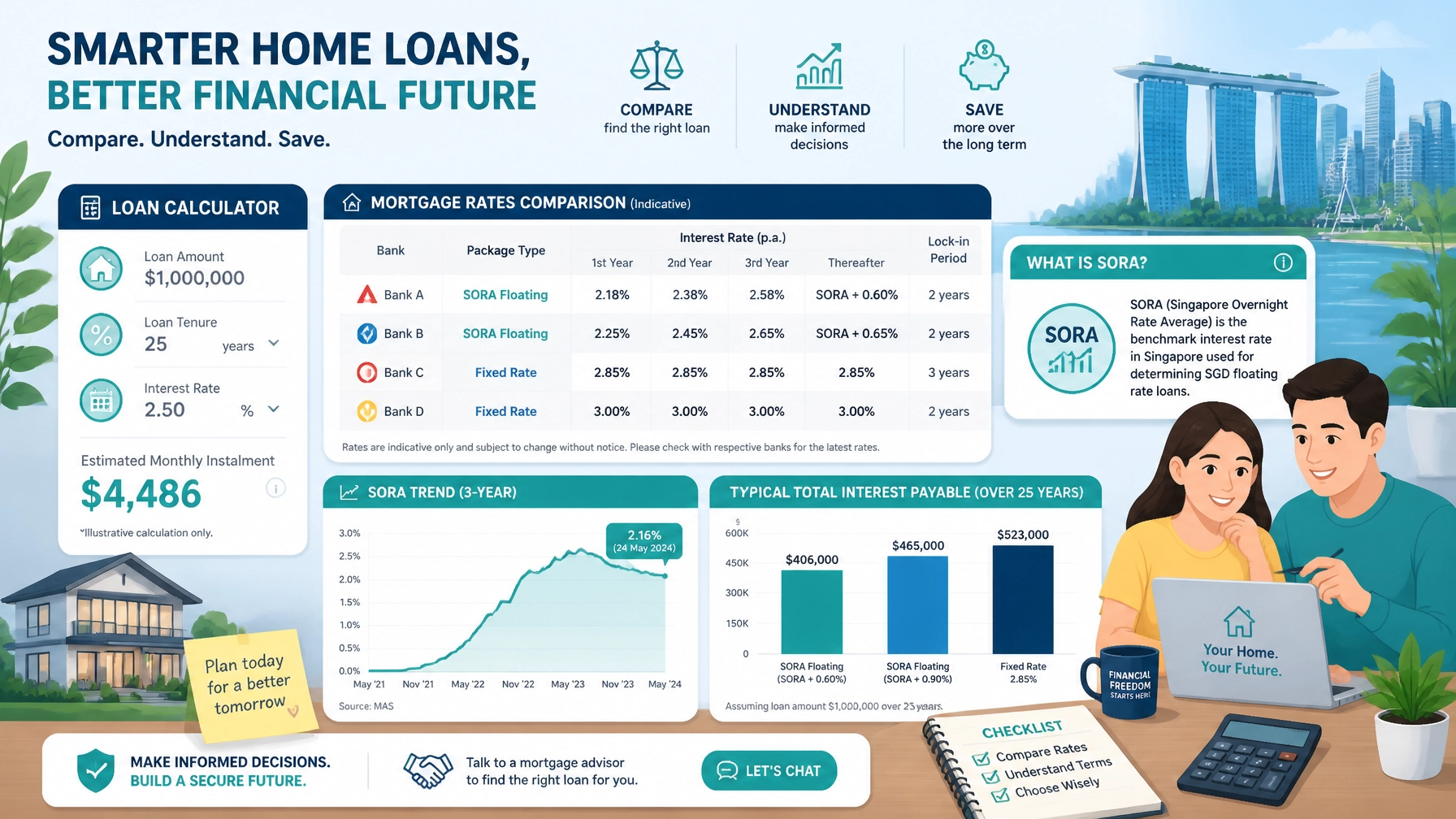
When evaluating the best home loan rates Singapore has to offer this year, the macroeconomic shift is undeniable. Following the peak interest rate environment of recent years, the 3-month compounded Singapore Overnight Rate Average (SORA) has stabilized around 1.0% to 1.2%.
For savvy property owners, this translates to exceptionally competitive bank offerings:
-
Fixed-Rate Packages (2-3 Year Lock-in): Currently hovering between 1.40% and 1.60% p.a. for qualified loans. This gives you absolute budget certainty and peace of mind.
-
SORA-Floating Packages: Hovering around 1.25% to 1.35% p.a. (calculated as 3-month SORA plus a razor-thin spread of around +0.20% to +0.30%).
Comparing these figures to the HDB concessionary rate of 2.60% or older private bank loans locked at 3.8% makes it crystal clear: staying passive is costing you a small fortune.
When Should You Make Your Move?
Timing is everything in mortgage refinancing Singapore. For starters, you should never wait until your lock-in period officially expires to start exploring your options.
The golden rule of thumb among industry insiders is to initiate your refinancing review 3 to 4 months before your current lock-in period expires. Why? Because processing a home loan transfer: from bank valuation and legal conveyancing to credit assessments: typically takes about 60 to 90 days. Starting early ensures you transition seamlessly into a lower rate the moment your penalty-free window opens, avoiding any painful fallback rates charged by your existing lender.
Unpacking Refinancing Costs Singapore Homeowners Must Know
Of course, switching banks is not entirely free. To calculate your true net savings, you must account for refinancing costs Singapore financial institutions charge:
-
Legal & Conveyancing Fees: Typically range from $2,000 to $3,000 for private residential properties. Fortunately, many banks offer attractive legal fee subsidies if your loan size exceeds $500,000, effectively wiping out this cash outlay.
-
Valuation Fees: Ranging between $300 and $700 depending on the property type, though these are frequently waived or subsidised during promotional campaigns.
-
Lock-In Penalties & Clawbacks: If you break your current contract prematurely (before your lock-in ends), expect a penalty of around 1.5% of your outstanding loan amount. Furthermore, check if your original bank has a legal subsidy clawback clause if you refinanced with them within the last 3 years.
Reprice vs. Refinance: Which Route Is Right for You?
When your lock-in ends, your current bank will likely offer you a “repricing” package (staying with the same bank) or you can choose to “refinance” (switching to a new bank).
-
Repricing is convenient because there are minimal legal fees and zero valuation required. However, existing banks rarely offer their most aggressive promotional rates to loyal, existing customers.
-
Refinancing with a new bank opens the door to aggressive acquisition pricing, cash rebates, and legal fee subsidies that easily outweigh the minor administrative hassle. If another bank offers a rate that is even 0.3% lower on a $1,000,000 loan, the savings dwarf the transfer costs instantly.
To make sure you’re navigating these options with maximum confidence, 👉 Discover Top-Rated Services & Mortgage Resources on NearMe.SG Today! for comprehensive community insights.

The TDSR Stress Test & The Math That Matters
Before you get too excited about switching lenders, remember that the Monetary Authority of Singapore (MAS) requires all borrowers shifting to a new bank loan to pass the Total Debt Servicing Ratio (TDSR) framework.
When you apply, banks will run a stress test using a medium-term interest rate floor (currently set at 4.0%) to ensure your total monthly debt obligations (including car loans, credit cards, and existing mortgages) do not exceed 55% of your gross monthly income.
Breaking Down the Savings: A Real-World Example
Let’s look at an outstanding loan of $800,000 over a 25-year tenure:
-
At an older rate of 3.5%, your monthly instalment is roughly $4,000.
-
Refinancing to a 2026 fixed rate of 1.5% drops your monthly instalment to approximately $3,200.
-
Monthly Savings: ~$800.
-
2-Year Lock-in Savings: Over $19,200 in cold hard cash: easily subtracting $2,500 in estimated legal/valuation fees leaves you with a net saving of well over $16,500 to $20,000+.
How to Leverage Mortgage Brokers for Maximum Savings
Navigating dozens of bank packages across DBS, UOB, OCBC, and foreign lenders can quickly become overwhelming. This is where independent mortgage brokers become your secret weapon.
Mortgage brokers in Singapore are free to use (they are compensated via bank commissions) and provide an unbiased, side-by-side comparison of every available package. They handle the heavy lifting: calculating your exact break-even point, vetting your TDSR eligibility against the 4% stress test, and negotiating fee waivers on your behalf.

Your Step-by-Step Action Plan to Refinance Today
-
Audit Your Loan Details: Retrieve your latest loan statement to check your exact outstanding balance, interest rate, and lock-in expiry date.
-
Consult a Professional Broker: Compare current 2026 SORA floating and fixed packages across multiple financial institutions.
-
Run the Break-Even Calculation: Subtract all estimated legal and valuation fees from your projected 2-year interest savings.
-
Submit 3 Months Ahead: Lodge your refinancing application 90 days before your lock-in expires to lock in today’s stellar rates without incurring penalties.
Ready to take control of your property financing and connect with trusted professionals? 👉 Browse Verified Local Property & Home Experts on NearMe.SG Now!
Thousands of Singapore homeowners use our free Property Buyer’s Checklist to compare rates, calculate true savings after fees, and lock in the best deal. Get your copy — no spam, instant download.
Disclosure: NearMe.SG may earn a commission from some links on this page. This does not affect our editorial recommendations.
📥 📘 Free Guide: Save $20K Refinancing
Download our cheatsheet with top bank rates and hidden fees to avoid.
Looking for the best deal on this? You can compare cost per application on SingSaver.
Disclosure: NearMe.SG may earn a commission from some links on this page. This does not affect our editorial recommendations.
RELATED POSTS
View all



The Robertson Opus Condo – 999-Year Luxury Living in Robertson Quay
June 26, 2025 | by nearme.sg

Singapore Property in 2026: The $3,000 PSF ‘New Normal’ & How to Invest Smartly
February 14, 2026 | by nearme.sg