


Spotting En Bloc Opportunities in Singapore: Successful Sites, Common Traits & High-Potential Projects
August 3, 2026 | by nearme.sg Editorial Team

Last updated
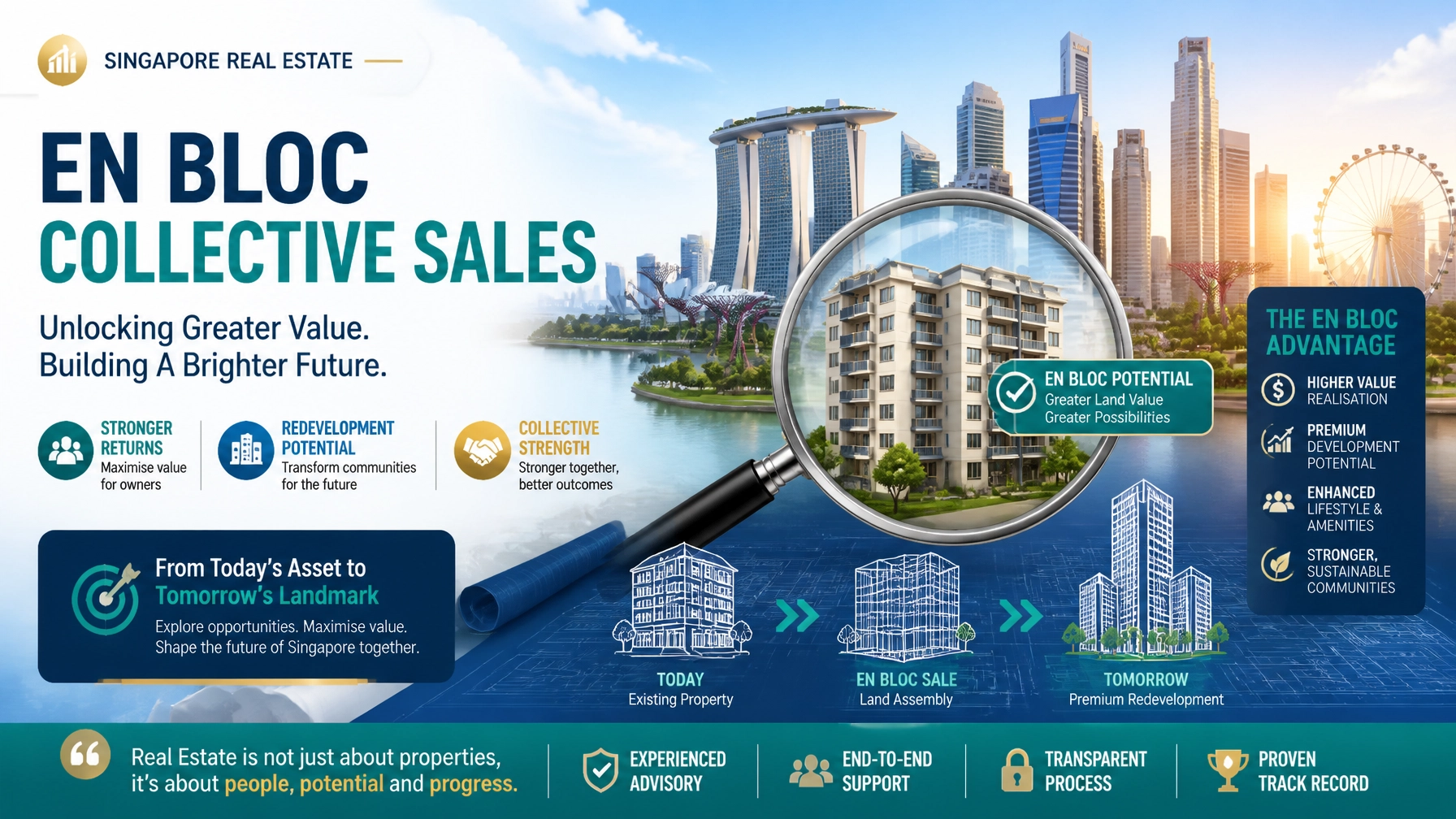
Navigating Singapore’s property market, few topics generate as much discussion as an en bloc (collective sale). In a collective sale, owners of an older development sell the whole site together, usually to a developer. Recent deals include the S$880 million Loyang Valley sale in April 2026 and the S$950 million Tan Boon Liat Building sale agreed in July 2026, which is still subject to approvals.
This article is general information, not financial, legal or property advice. It doesn’t take your personal circumstances into account.
This article looks at what has been reported about these deals, the traits often cited in sites that have sold, and the factors people check in older developments.
1. Recent Collective Sales in 2026
This section covers two large collective sale deals reported in 2026: Loyang Valley, which has been sold, and the Tan Boon Liat Building, whose sale was agreed in July 2026 and is still subject to approvals. Earlier, the former Thomson View Condominium on Bright Hill Drive was sold en bloc for S$810 million, a deal agreed in November 2024 and completed in October 2025, CapitaLand and UOL said.
🏛️ Loyang Valley (Sold April 2026 for S$880M)
On 17 April 2026, Loyang Valley, a 362-unit, 99-year leasehold condominium, was sold for S$880 million to a consortium led by SingHaiyi Group. The latest public tender closed on 10 February and was followed by a 10-week private treaty period. The price matched the reserve price at which the site was relaunched on 8 January, according to EdgeProp. Both EdgeProp and The Business Times worked out the land rate after adding an estimated S$226 million in land betterment charges and a S$246 million lease upgrading premium, but they reported different figures: S$940 and S$959 psf per plot ratio respectively. Neither report explains the difference.
🏢 Tan Boon Liat Building (S$950M Sale Agreed July 2026, Subject to Approvals)
Non-residential sites can also attract bids. In July 2026, a unit of Kingsford Group agreed to buy the freehold Tan Boon Liat Building at Outram Road for S$950 million, according to The Business Times. The sale is subject to owners’ approval (at least 80% by share value and strata area) and to Strata Titles Board approval. On 29 July, The Straits Times reported that tenants had received a letter dated 21 July saying no sale had been confirmed. According to The Business Times, URA has advised that the site’s Business 1 zoning (plot ratio 3.1) can be rezoned to residential with commercial use on the first storey, at a plot ratio of 4.9.
2. Common Features of Successful En Bloc Sites
What do sites that have been sold en bloc tend to have in common? They share a specific checklist of physical and financial traits that make them attractive to developers. When developers buy residential land, they face Additional Buyer’s Stamp Duty (ABSD) of 40%. Up to 35% can be remitted if they meet IRAS’s conditions, broadly completing the project and selling all units within the set period, and the other 5% is not remittable (see IRAS’s ABSD rules for housing developers).
- Aged 20 to 40 Years: Older condos may face wear and tear, higher maintenance costs, and land that is used less intensively than current zoning allows.
- Plot Ratio Uplift Potential: Under the URA Master Plan, if a site’s existing gross plot ratio is significantly lower than what current zoning allows, developers may see value in building higher and denser.
- Boutique or Manageable Scale (Under 200 Units): Because the ABSD remission depends on selling every unit within a set period, large sites carry more risk for developers, so very big collective sales can be harder to complete.
3. Traits People Check in Older Developments
These are factors often discussed in coverage of collective sales. None of them means a sale will happen.
🔍 Step 1: Check the URA Master Plan Plot Ratio
Some coverage looks at older developments where the existing plot ratio is well below what the current URA Master Plan allows. If a site is zoned for a higher plot ratio or sits in an area earmarked for government rejuvenation (such as the Greater Southern Waterfront or upcoming regional centres), the site may be of more interest to developers, though zoning alone doesn’t mean a sale will happen.
🏘️ Step 2: Consent Thresholds for a Collective Sale
A collective sale needs the agreement of owners who together hold a minimum share of the development. That share is measured by both share value and strata area, not by head count. The thresholds are currently 90% for developments less than 10 years old and 80% for those 10 years or older. On 8 September 2026, Parliament passed changes that will lower the threshold to 70% for developments aged 40 to 59 years and to 65% for those aged 60 years and older (Land Titles (Strata) (Amendment) Act 2026, Act 20 of 2026; CNA). The changes take effect from a date the Ministry of Law has said will be announced. If not every owner agrees, the sale also needs approval from the Strata Titles Board.
🚆 Step 3: Transport and Regional Plans
Some people also follow official announcements on new transport links, such as Cross Island Line (CRL) interchanges and integrated transport hubs, and on regional growth plans in the URA Master Plan.
Conclusion
Collective sales can give owners of older developments a way to sell, but outcomes vary and many attempts fail. Market conditions, ABSD rules and pricing all affect whether a collective sale goes ahead.
By reading URA Master Plan data and following transactions such as Loyang Valley and Tan Boon Liat Building, you can better understand how collective sales work. This article is general information, not financial, legal or property advice.
RELATED POSTS
View all

New Executive Condo Rules 2026: Expert Property Investment Strategy
May 9, 2026 | by nearme.sg

Refinancing a Home Loan in Singapore (2026)
August 2, 2026 | by nearme.sg Editorial Team